New County Detections of SGM in IA.
September 3rd, 2026
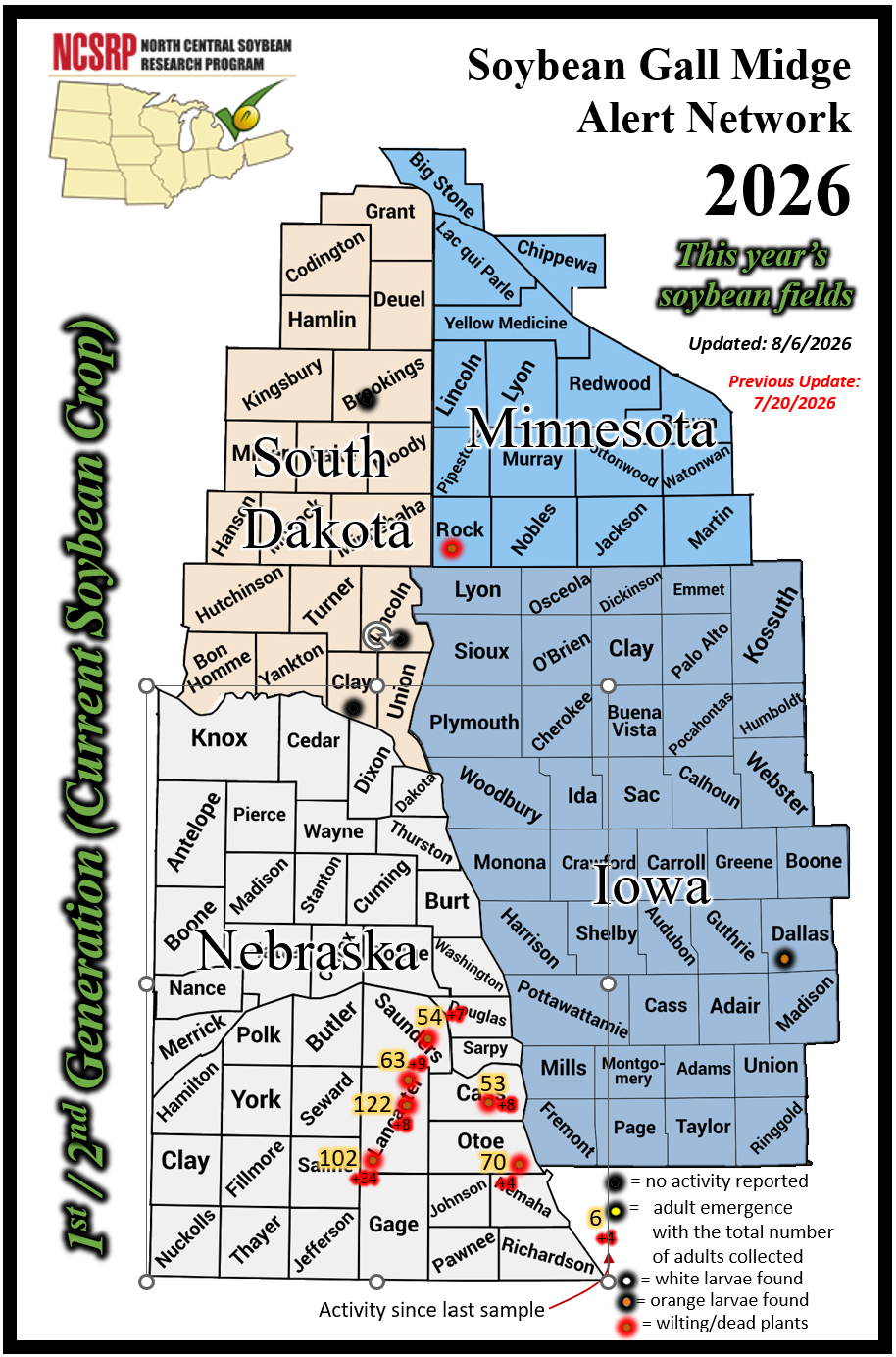
A new county detection of soybean gall midge occurred in Howard County, IA this past week bring the total new counties in Iowa this year to four. See map for more details. It can be difficult to find larvae in soybean in September. Focus on plants that are still green along field borders and near the base of the plant.
Field Observations
Wilting and dead plants increased marginally at some sites over the past few weeks. With R7 stage soybean occurring within the next week or two we will cease the collection of injury scores.
2026 Season Notes
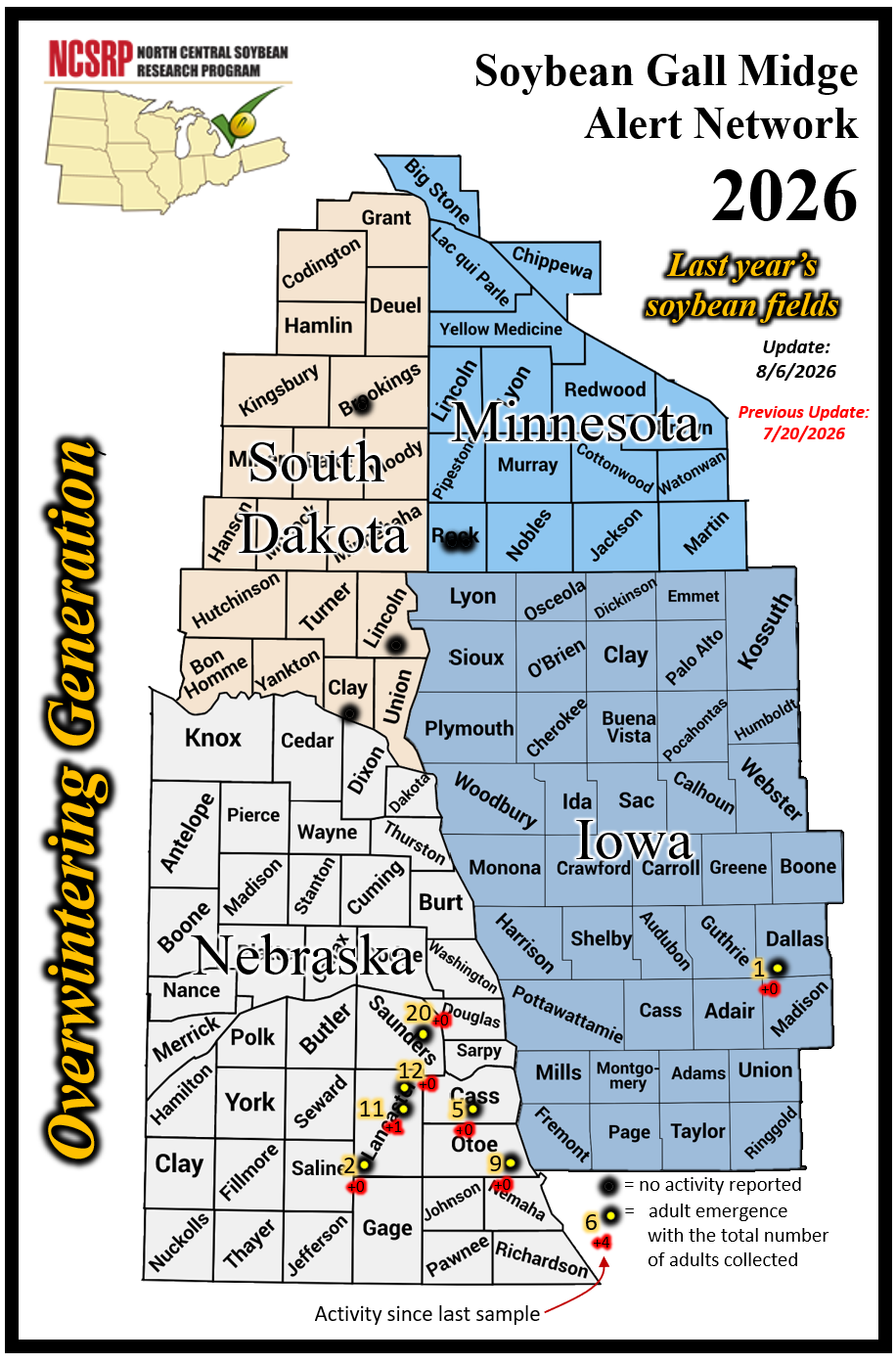
Adult emergence began May 29 in Nebraska and June 1 in Iowa. No adult detections in South Dakota or Minnesota.
Larvae were first detected June 8 in Lancaster County, Nebraska, June 17 in Dallas County, Iowa and June 26 in Minnehaha County, South Dakota.
Larvae are now present at all monitored sites in Nebraska and Iowa.
Wilting and dead plants were documented in Lancaster County, Nebraska on June 22 and in Minnehaha County, South Dakota on June 26, and in Rock County, Minnesota on July 2nd.
Adult emergence from current year’s soybean began on July 2nd in Otoe and Saunders County, NE.
Disclaimer: Information on this website does not represent the official views or opinions of the university.
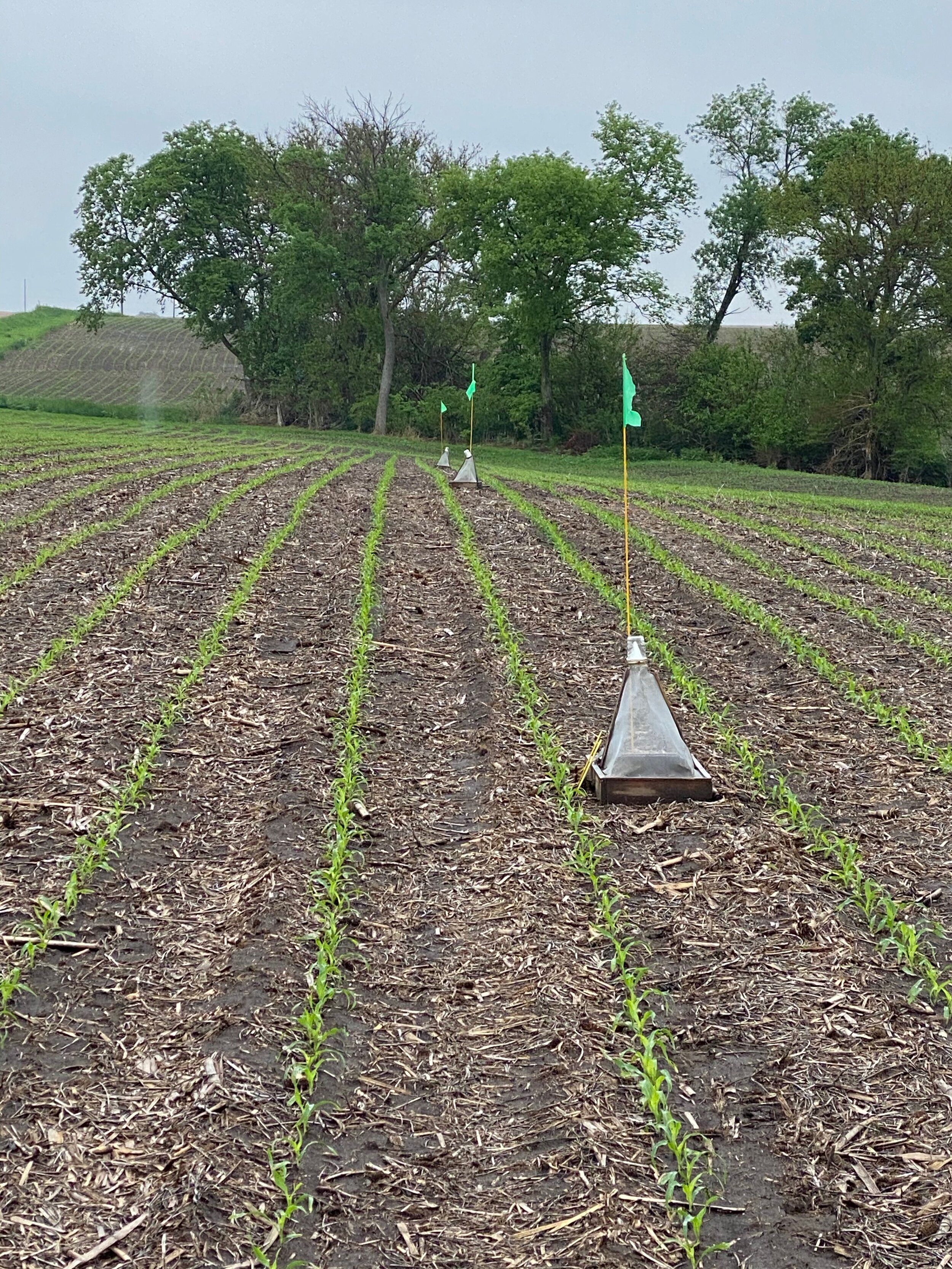
Cages Removed.
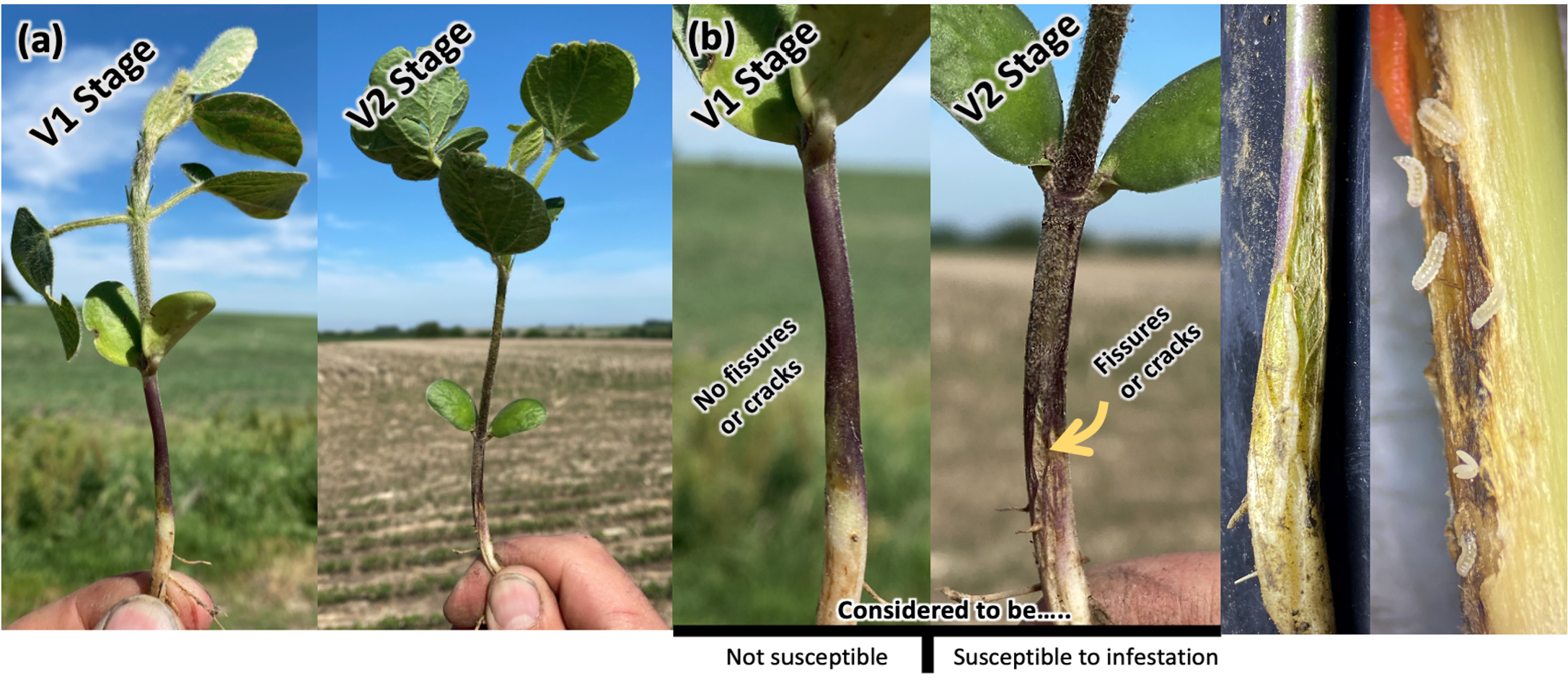
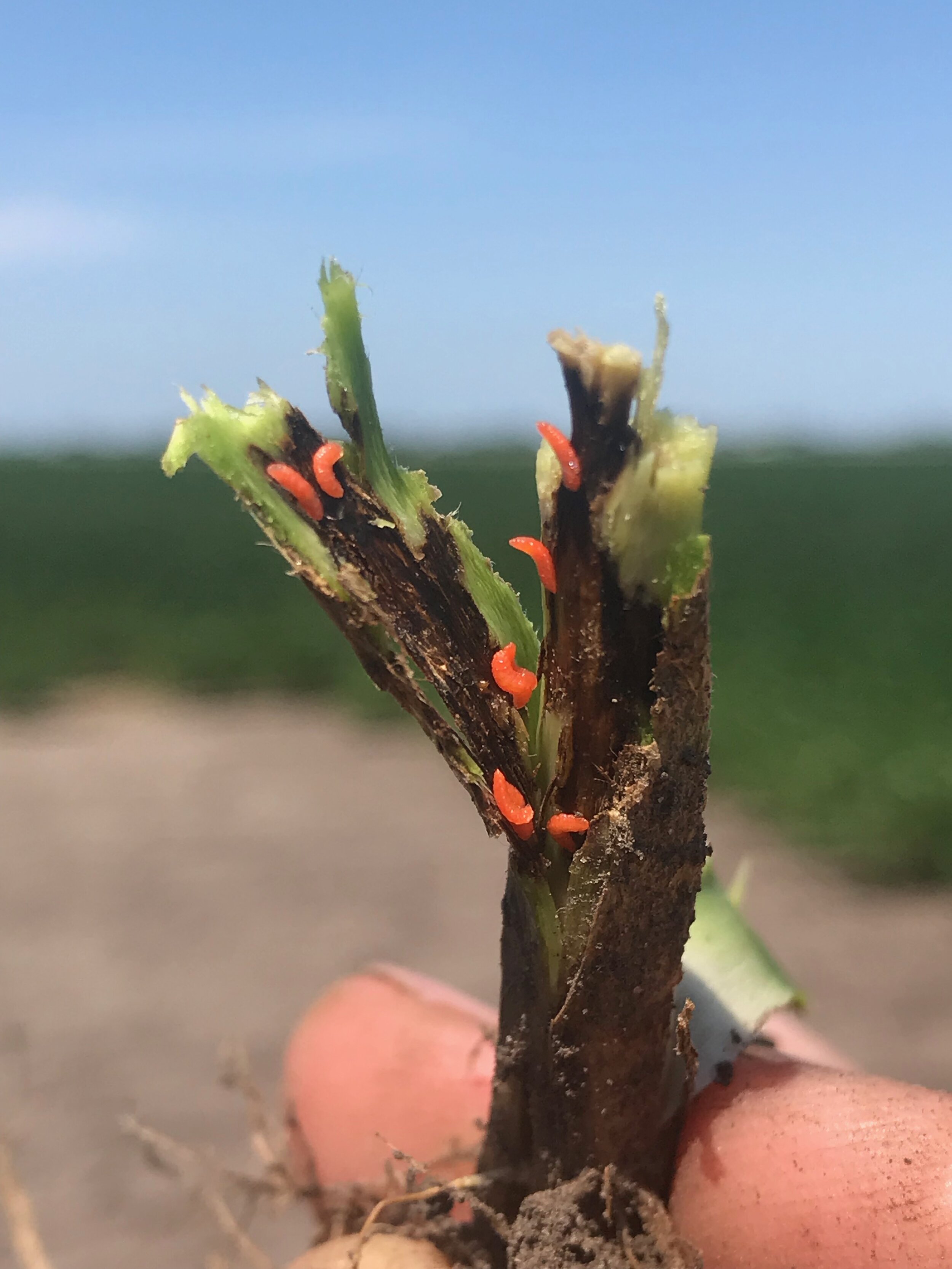
Soybean development stages with the presence of fissures below the cotyledonary node at the V2 stage. White and orange larvae can be found in infested plants at about 5-10 days after adult activity.


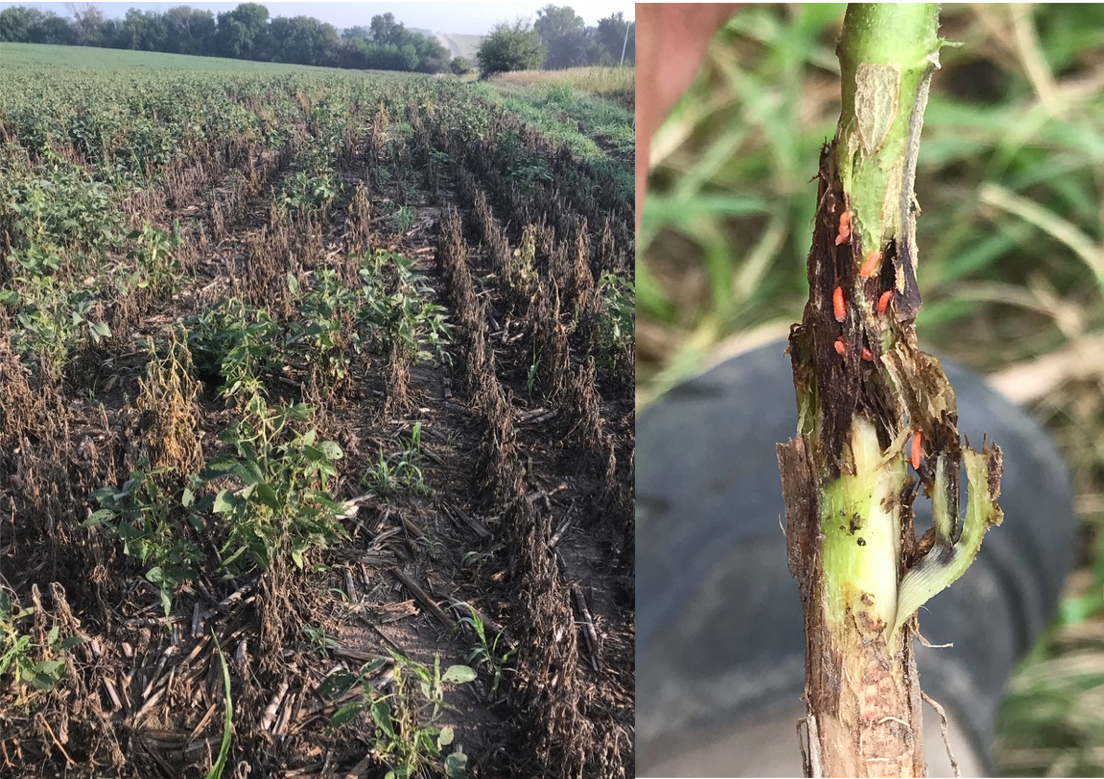
Figure 2. Larvae in soybean petiole, soybean field with soybean gall midge injury, and stem infested with soybean gall midge.

Wilting and dead plants from soybean gall midge feeding in Lancaster County, NE. Photo taken on July 19th, 2024. Credit: Justin McMechan

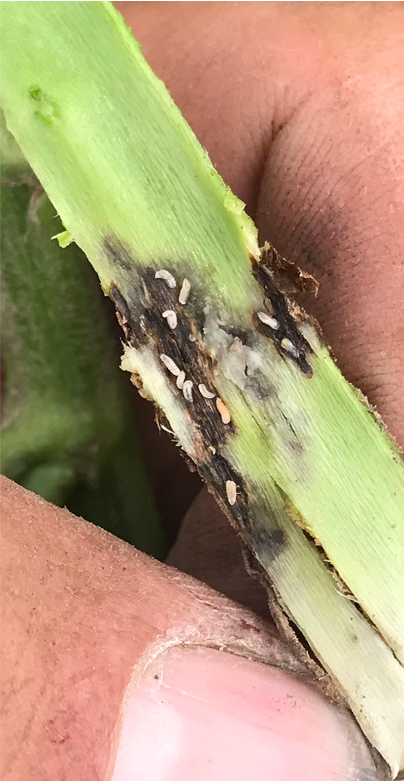
White larvae found on soybean plants near Mead, NE on June 14th, 2023.
Photo taken by Justin McMechan.

Unmanned aerial vehicle photo of soybean gall midge injured field in Cass County, NE taken on August 26th, 2020.
Photo courtesy of Nick Tinsley (Bayer Crop Science)

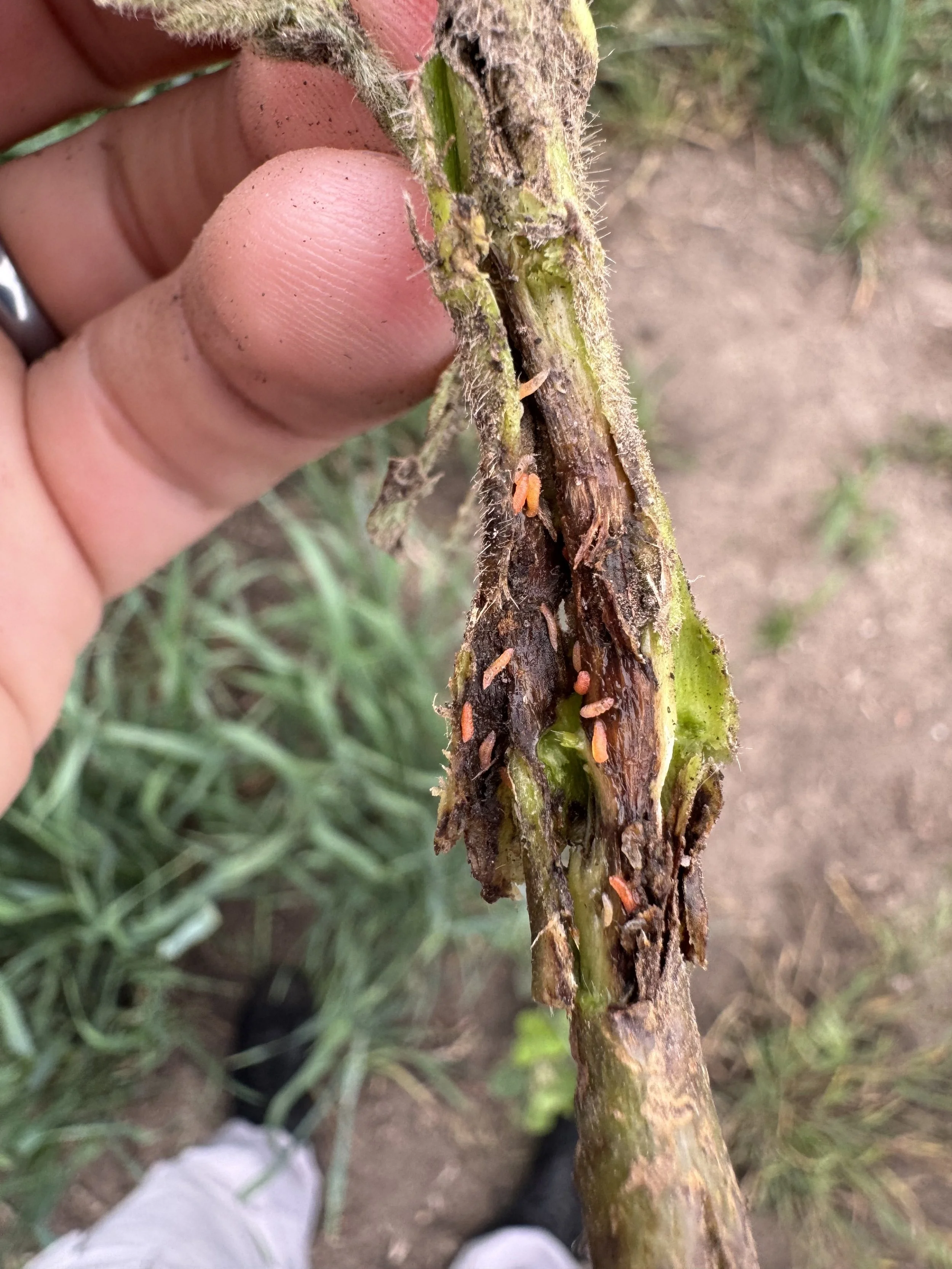
White and orange larvae found on soybean near Mead, NE on June 19th, 2023